
We are trial lawyers representing victims of corporate and government abuse and discrimination. Our clients are whistleblowers, persons of color, persons who speak with accents, women, persons with disabilities, gay workers, older workers, persons who have been exposed to toxic chemicals, and persons who have been fired for exercising their rights.
"We fight those who abuse power and make them accountable in front of a jury."
|
December 7, 2011
Today, 25 former employees of Hertz Rental Car Company filed a lawsuit in Seattle alleging that Hertz terminated them in October 2011 owing to religious, race, and national origin discrimination. The 25 plaintiffs are Muslims who were born in Somalia and speak English with an accent. Some of them have worked at Hertz for almost 15 years and have always been permitted to answer the call to prayer during work hours without clocking out. Then on September 30, 2011, Hertz managers insisted for the first time that the plaintiffs clock out before going to prayer. The complaint alleges that other Hertz employees are not required to clock out to take smoke or bathroom breaks. Jack Sheridan, the attorney representing the plaintiffs said, "After more than a decade of permitting brief prayer during work hours without clocking out, Caucasian Hertz managers have changed the rules to focus on Somali Muslims as an excuse to fire them." The complaint alleges that other Sea-Tac Muslim employees are permitted, and have always been permitted, to take the 3-5 minutes to pray without clocking out. The case was filed today in King County Superior Court and alleges violation of the Washington Law Against Discrimination. |
Hanford Whistleblower Dr. Walter Tamosaitis Testifies Before Congress And Speaks Out On Rachel Maddow Show
|
December 15, 2011 In December, Dr. Tamosaitis was called before congress to testify about whistleblower retaliation at Hanford and then invited to speak about his experiences on the Rachel Maddow Show. Click here to see excerpts from his testimony shown on the Rachel Maddow Show On November 9, 2011, Dr. Tamosaitis filed a federal lawsuit against DOE seeking an injunction to prevent DOE from automatically siding with contractors who retaliate against whistleblowers. Sheridan said, "The contractors claim attorney client privilege with DOE in whistleblower litigation. How can DOE provide oversight if they are helping the contractors defend?" Also named is URS, his employer. Dr. Tamosaitis is asking the federal judge to order URS to return him to a position of leadership and responsibility at the Vit Plant. Sheridan stated, "The reason that DOE is in this lawsuit is because we allege its managers supported or even initiated the removal of Dr. Tamosaitis from the Waste Treatment Plant ("WTP" or or Vit Plant) and participated in the decision to prevent his return. Plaintiff seeks money damages from URS. A separate lawsuit is proceeding forward in state court in Benton County against Bechtel for intentionally interfering with his relationship with URS by participating in the decision to terminate him from the WTP. That case is set for trial in May 2012.Dr. Tamosaitis was removed from his position at Hanford, escorted off the Hanford property, and is currently assigned to a basement office performing no meaningful work. His complaint alleges that just before his removal, he called into question whether Bechtel met a contract milestone that resulted in a multi-million dollar bonus. Emails recently obtained from URS in pretrial discovery show that on July 1, 2010, a day after Bechel claimed the work was done supporting the bonus, DOE Manager Dale Knutson, was in discussions with Bechtel Manager Frank Russo in which Russo criticized Dr. Tamosaitis' concerns over the WTP. Russo wrote, "Walt is killing us." See email exchanges below. In response to an email written by Dr. Tamosaitis discussing his concerns about WTP, Knutson wrote to Russo, "If this shows up in the press we will be sticking to our previous comment . . . Deliberate haste will be our approach."Bechtel and URS were hired by the DOE to design and build the Hanford Waste Treatment Plant, which will be an industrial complex of facilities for separating and vitrifying (immobilizing in glass) millions of gallons of high-level nuclear tank waste stored in 177 large underground tanks on the Hanford site. DOE has stated that it intends to begin building the plant before the design is completed to meet time goals. Mr. Tamosaitis is investigating whether the "deliberate haste" is related to this DOE approach. Vitrification technology involves blending the high-level nuclear tank waste with glass-forming materials and heating it to over 2,000 degrees Fahrenheit. The mixture is then poured into stainless steel canisters to cool and solidify. In this glass form, the high-level nuclear tank waste is currently considered stable and impervious to the environment, and its radioactivity will dissipate over hundreds or thousands of years. Dr. Tamosaitis was removed from Hanford on July 1, 2010. In a July 28, 2010 email exchange between WTP Manager Russo, and Bechtel National President David Walker (Russo's boss), and Bechtel Parent Company President J. Scott Ogilvie, they reveal close communications and cooperation with DOE managers on what they call the “WTP Tamosaitis event.” In one email, Walker confirms that he spoke with DOE manager Ines Triay about the “Tamosaitis event.” According to Walker, Triay said, “we will manage through the technical issues and DNFSB investigation part satisfactorily although at cost of significant disruption/time etc.” She went on to say that they “Need to be sure ‘Hill’ gets covered and protect the $50 million.” See July 28, 2010 email exchange below. In his deposition, Russo confirms the names of the DOE officials involved, that the Hill is Capitol Hill, but he attributes the “protect the $50 million” comment to his boss, David Walker. See Russo deposition excerpts below. Russo confirmed that the concern about the money was related to Dr. Tamosaitis (see Russo page 324-325 below): Q. (By Mr. Sheridan) All right. But -- but it's true, is it not, that you had some concerns that the $50 million -- that Dr. Tamosaitis' conduct may in some way jeopardize the 50 million? A. He had some concerns. Q. Your boss? A. (Nods head.) Yes. Although BNI and URS claim that Dr. Tamosaitis was being reassigned to a position off the WTP, plaintiff has obtained an announcement dated July 1, 2010, showing that hours before he was removed from the WTP, management drafted and circulated an announcement showing that “Dr. Walt Tamosaitis will manage this group to be staffed by members of the existing R&T organization in alignment with scope completion.” See below, July 1, 2010 email on reassignment. On June 13, 2011, the Defense Nuclear Facilities Safety Board (“DNFSB”) released a report analyzing the failures in the safety culture at Hanford, which is operated by the Department of Energy (“DOE”). The report documented the removal of Dr. Tamosaitis from the Hanford site by Bechtel and URS after he raised technical and safety concerns and called upon DOE Secretary Chu to “conduct a non-adversarial review of Dr. Tamosaitis' removal and his current treatment by both DOE and contractor management and how that is affecting the safety culture at WTP.” The report made two major findings:
Click here to view Federal Complaint Listen to Northwest Public Radio Report Here See KEPR TV Report Here
Click below to see a copy of the 50 Item Issue List that Dr. Tamosaitis brought to the July 1, 2010 meeting with Bechtel and URS managers (discussed at pages 19-20 of civil complaint above) just one day after Bechtel claimed that it met its June 30, 2010 contract requirements to earn a $6 million fee. On July 2, 2010, his Hanford badge was pulled, his blackberry was confiscated, and Dr. Tamosaitis was escorted off the Hanford premises. Now he shares a basement office with two copying machines and has been assigned no meaningful work. Dr. Tamosaitis' July 1, 2010 50 item issue list Click here to see Bechtel email string from April 2010 acknowledging that if they fail to close the M3 issue by June 30, 2010, they will lose 80% of Bechtel's fee. Click here to see DOE contract provision warning of need to close M3 issue or risk forfeiture of 80% of fee due on June 30, 2010. Tom Carpenter and the Hanford Challenge are working with Jack to provide support and to make sure Walt's story is told in the halls of Congress and in the media. |
|
April 28, 2011 Olympia, Washington Today the Washington State Supreme Court declined to review the December 2010 decision by the Court of Appeals granting a new trial to former Chevron truck driver Bruce Johnson. Chevron had fought hard to get Supreme Court review having enlisted the aid of the Washington Defense Trial Lawyers Association and the Association of Washington Business to submit "friend of the court" briefs arguing for a return to the old days when employers could more easily ignore requests for accommodation by their employees by claiming they were not "medically necessary," which was a confusing and undefined term. The Supreme Court's decision to deny review is a rejection of that standard and means that more Washington employees with disabilities will obtain the accommodations guaranteed by the Washington Law Against Discrimination. Johnson v. Chevron, 159 Wn. App. 18, 244 P.3d 438 (2010). In December 2010, in a unanimous decision, the Court of Appeals ordered the trial court to grant a new trial in the disability discrimination case brought by Bruce Johnson against Chevron in 2008. King County Superior Court Judge Julie Spector, the trial judge, had dismissed before trial Mr. Johnson's main claim that Chevron failed to accommodate his back injury holding that Mr. Johnson could not show that his proposed accommodation was medically necessary. The Court of Appeals found the trial court's ruling to be reversible error. Also, at Chevron's request, the trial judge erroneously instructed the jury that Mr. Johnson must prove that he was treated unfairly as compared with other workers. The Court held that "This is not the law and the error was not harmless." Jack stated, "This is a great victory for victims of disability discrimination because it clarifies two important legal issues. First, medical necessity is not an element that needs to be proved in a failure to accommodate case." As the Court of Appeals said, the issue 'is whether Johnson’s impairment had a substantially limiting effect upon his ability to perform the job such that the accommodation was reasonably necessary, or doing the job without accommodation was likely to aggravate the impairment such that it became substantially limiting.' Second, it's been the law in Washington since 1994 that plaintiffs can prove discrimination by showing that discrimination was a substantial factor in the adverse action. But here, the judge told the jury that Mr. Johnson additionally had to show that he was treated worse than his co-workers (called comparators), which has never been the law, and since we had not put on any comparator evidence, the outcome was predictable." Those decisions at the trial level required Mr. Johnson to file an appeal and cost him more than a year waiting for justice. Court of Appeals opinion author Judge Anne Ellington (concurrences by Judges Ann Shindler and Mary Kay Becker), did a great job in clearly stating the law and in correcting the errors below. Mr. Johnson is ready to get this case resolved fairly in front of a new jury. The complaint alleges that Chevron knew Bruce Johnson had chronic back pain caused by his employment with Chevron, and did nothing to accommodate him except to send him home or place him on light duty. Chevron made no effort to work with Mr. Johnson or his physicians to find an accommodation so that he could continue on the job as a tanker truck driver. Once Chevron disallowed the use of Mr. Johnson’s requested accommodation, an ergonomic fuel hose drainer, it made no further effort to find an alternative accommodation. A new trial is set for January 2012. Click Here for the Court of Appeals Decision. |
|
December 10, 2010 Today, Jim Woodbury filed an appeal of King County Superior Court Judge Michael Hayden's decision reversing an earlier ruling and dismissing Chief Woodbury’s whistleblower complaint from Superior Court only a week before the trial was set to begin, and sending the case to be tried without a jury before an administrative law judge in a forum in which the Rules of Evidence do not apply. Over Jack’s objections Judge Hayden heard a last minute motion to dismiss filed by the City, which argued for the second time that the case should be sent to an administrative forum instead of being heard by a jury in Superior Court. After brief oral argument, Judge Hayden adopted the City’s argument and dismissed the case. This decision was contrary to a prior ruling early on in the case where Judge Hayden had agreed to stay the administrative proceedings and allow the claim to be heard in Superior Court by a jury. The ruling denies Chief Woodbury of a trial by jury, which is guaranteed by the Washington Constitution. In a statement, Jack said, “We do not think that the decision is supported by any reasonable reading of the law. We think Judge Hayden’s decision is an abuse of discretion, and we are filing an appeal. We hope to be back in front a jury very soon.” Chief Woodbury was demoted after reporting misconduct in the Fire Marshal’s Office to the Seattle Ethics and Election Commission. He reported that a fire inspector had failed to invoice First and Goal, the owner and operator of Qwest Field, for fire guard services provided by the Seattle Fire Department, in an amount totaling nearly $200,000. Under the Seattle Whistleblower Code, complaints are supposed to be held as confidential. Sheridan said, “We were prepared to present evidence that Fire Chief Dean knew that Woodbury filed the complaint to the SEEC and that he was demoted by Dean because he filed the complaint.” The resulting Ethics Report found that Fire Chief Dean and two of his assistant chiefs who served as SFD Fire Marshals between 2002 and 2008, "having the duty and obligation to be effective stewards of public funds, failed, despite warnings, to ensure that the fire inspector position at First & Goal was appropriately supervised, and each bears responsibility for the failure to collect $195,697 of reimbursable expenses due from F&G from 2002 through 2007." This case will decide whether SFD employees in the future have the courage to report improper activities at the SFD, or whether they decide it's safer to remain silent or worse. That's what this case is about. No one was held accountable for retaliating against the whistleblower. It sends the wrong message to the workforce. Speak up and you will be punished. When government won't hold its managers accountable for whistleblower retaliation, then only a jury can hold them accountable. If the City had acknowledged the retaliation, apologized, and reinstated Woodbury, he would not be in court. Read the Woodbury Summary Judgment Response Here
|
|
Kennewick, Washington After a mistrial was granted in September, a new trial has been set in this case for January 2012. Benton County Superior Court Judge Bruce Spanner denied the Kennewick Irrigation District's attempt to have this whistleblower case dismissed by arguing that the claim could only be brought in an administrative forum. The judge rejected the KID's argument and found that the statute allows municipal employees who are victims of whistleblower retaliation to sue in state court or to go into the administrative forum. Engineer and former Kennewick Irrigation District Manager Brad Wellenbrock is alleging that he was fired from the KID for opposing improper actions by its management, which included board members using KID water for their private business needs. Click on the links below to read coverage in the Tri-City Herald. |
|
November 11, 2011, Richland, Washington Today Donna Busche, the Manager of Environmental and Nuclear Safety for URS at the Hanford Site, filed a complaint with the Department of Labor alleging retaliation and discrimination by URS and Bechtel in violation of the Energy Reorganization Act, a federal act designed to protect whistleblowers. Ms. Busche holds a critical position at Hanford in that her job is to ensure that work performed by Hanford contractors does not violate federal environmental and nuclear safety regulations. Ms. Busche has testified at hearings held by the Defense Nuclear Facilities Safety Board ("DNFSB") and in connection with other whistleblower litigation filed by Dr. Walter Tamosaitis. Her complaint alleges that URS and Bechtel have engaged in retaliatory conduct as a result of that testimony and because she will not compromise in requiring the contractors to comply with the law. |
|
NOVEMBER 5, 2009, SEATTLE, WA The City of Seattle has settled a race discrimination lawsuit brought by former Seattle City Light Manager Mattie Bailey for the sum of $812,250.00. Today Bailey filed documents to dismiss her lawsuit in light of the settlement. The settlement comes more than two years after a King County jury awarded Ms. Bailey the sum of $503,195.00 ($462,000 as damages for emotional harm) for race discrimination and harassment by other City Light managers. The jury award came in February 2007 after a six-week jury trial. At trial, Sheridan presented evidence that Bailey, who is African American, worked for City Light from 1981 until her retirement in 2008. For the first decade of her employment, Ms. Bailey proved herself as a top-level manager working as a direct report to two superintendents and heading the Communications Division. When Gary Zarker became superintendent, he reorganized Bailey’s division. Zarker gradually took away her responsibilities and gave them to Caucasian new hires. In 1999, Zarker hired Robert Royer to serve as the Director of Communications. Bailey then reported to Royer who, as a member of the executive team, reported directly to Zarker and later to Jorge Carrasco, who replaced Zarker in 2004. Sheridan also presented evidence that under Royer, Bailey was removed from most of her managerial duties and given clerical work, such as processing invoices. At a staff meeting attended by Bailey, Royer expressed admiration for Thomas Jefferson's “fatherly relationship” to his slaves. In a private meeting with Bailey, Royer compared her with the African American movie character “Super Fly” because she was wearing sunglasses. The jury found that City Light had created a hostile work environment in its daily treatment of Ms. Bailey and that the City had discriminated against Ms. Bailey by failing to give her equitable pay. The City appealed the jury verdict and in 2008, the Division One Court of Appeals affirmed the jury’s verdict on the harassment claim, but overturned the pay claim following the U.S. Supreme Court holding in Ledbetter v. Goodyear Tire & Rubber Co., Inc., which held that under federal law, the statute of limitations begins to run when the first paycheck is issued rather than when the plaintiff learns that she is being underpaid. In a press release, Jack Sheridan stated, “We disagreed with the Court of Appeals’ ruling because Ledbetter was a federal case and Ms. Bailey’s case was brought under state law, which provides greater civil rights protections than federal law, but even after Congress and President Obama overturned the Ledbetter decision through legislation, we could not convince the Court of Appeals to change its decision. We had to accept that we were going to retry the case on damages.” As to the settlement, Sheridan said, “Had we gone to a second trial, Ms. Bailey was prepared to prove her damages from the first trial and to show that after the February 2007 jury verdict, the harassment continued and that she was treated more like a office assistant than a manager, which caused her to take early retirement.” Sheridan indicated that “Mattie was a great manager and the City wasted her as a resource because it allowed the good old boys to run the utility instead of awarding jobs based on merit.” |
For more case summaries, click on "Trials" button on left.
Call us at 206-381-5949 or click on the "Contact Us" button on left. Perhaps we can help you fight back.
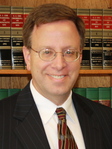
This firm is owned an operated by John P. Sheridan who goes by Jack Sheridan.